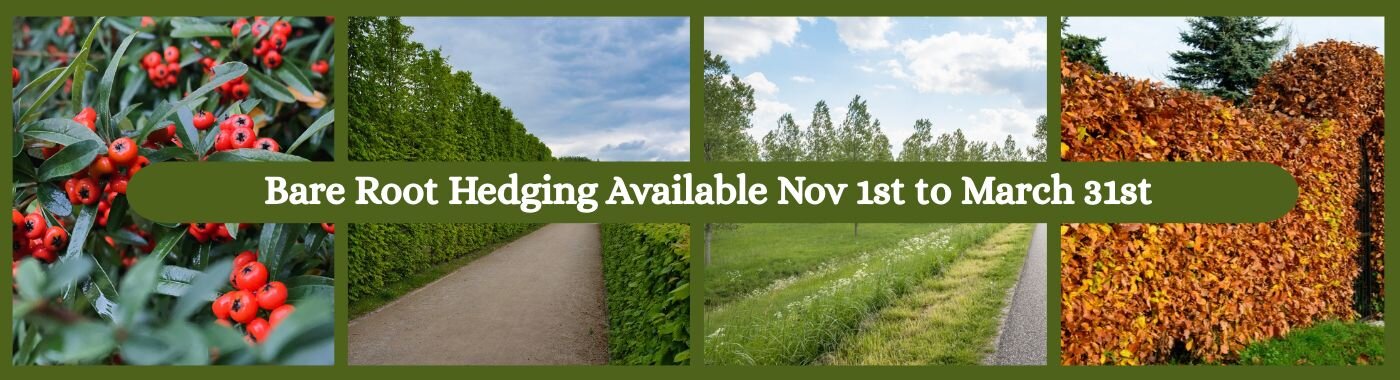




Fagus sylvatica 'Atropunicea' commonly known as the Copper Beech or Purple Beech, this is a magnificent, stately deciduous tree. Belonging to the Fagus genus, it is highly celebrated across Ireland for its dramatic, dark foliage and architectural presence. In spring, the leaf buds open to reveal delicate, translucent leaves fringed with soft hairs and colored a striking deep pink-to-coppery red. As summer deepens, the foliage matures into a rich, glossy dark purple or near black.Whether grown as an expansive, slow-growing specimen tree or tightly clipped into a dense, high contrast privacy hedge, it creates an unforgettable visual anchor in any landscape. In October, the canopy shifts into a warm, shimmering copper orange and russet brown. When kept trimmed as a hedge or pleached screen, it holds the crisp brown leaves firmly on the branches all winter long, providing year round privacy and wind shelter.
Key Features
- Morphology & Form: Left unpruned, it develops a massive, spreading, oval to rounded crown, reaching a mature height of 25 to 30 metres and occasionally over 40m.
- Dynamic Foliage: The alternate, oval leaves emerge with fine, downy hairs and a vibrant wine-red to deep purple color in the spring. Over the summer, they mature to a rich purplish-green. Come autumn, the canopy shifts dramatically into ablaze hues of coppery-orange, bronze, and yellow.
- Winter Privacy: When tightly clipped as a hedge, copper beech retains its dried, straw-coloured autumn leaves throughout the winter until new growth pushes them off in spring. This makes it highly valued for year-round screening and privacy despite being a deciduous plant.
- Twigs & Buds: Features distinctive, sharply-pointed, long, narrow brown winter buds that zig-zag along purplish-brown twigs.
- Bark: Covered in sleek, smooth, silvery-grey bark that resembles elephant skin. Because the bark is thin, a mature tree's dense canopy plays a vital role in shading its own trunk to prevent bark splitting from intense sunlight exposure.
- Fruit (Beechnuts): Produces small, inconspicuous catkins in spring. These give way in autumn to triangular, three-angled edible nuts (beech mast) safely enclosed within prickly, spiny brown cases. Heavy nut production typically occurs only once the tree reaches maturity.
Growing Conditions
- Sunlight: Prefers full sun to partial shade. Planting in full sun is highly recommended, as optimal light exposure directly enhances the depth and vibrancy of the purple pigment in the foliage.
- Soil Type & pH: Exceptionally adaptable to different soil compositions. It grows beautifully in acidic, neutral, or alkaline substrates, showing a strong affinity for fertile, humus-rich, calcareous chalk and limestone soils. It can handle heavy clay, sand, and loam.
- Moisture Requirements: Requires well-drained soil. While it thrives with consistent, moderate moisture, it strictly cannot tolerate waterlogged, heavy, or poorly drained sites, which quickly cause root rot. Prolonged drought conditions also induce significant stress.
- Exposure: Moderately wind-resistant and fully winter-hardy across Ireland. However, it generally fares best with a degree of shelter rather than being subjected to highly exposed, blasted ridges. It performs poorly in heavily polluted, confined urban conditions.
Wildlife Value
- The Beech Mast Feast: The falling beechnuts (mast) serve as a massive, high-protein food resource in autumn and winter. They are actively cleaned up by small mammals (mice, voles, squirrels) and birds like jays, nuthatches, wood pigeons, and finches. Historically, this abundant mast was used to fatten free-range foraging pigs.
- Habitat & Nesting Screen: Because the marcescent hedge leaves stay attached through the bitter winter months, it offers vital year-round sanctuary and thermal cover for nesting birds and overwintering beneficial insects when other deciduous hedges are entirely bare.
- Caterpillar Forage: The foliage provides food for the caterpillars of several native moth species, including the barred hook-tip and clay triple-lines moth.
- Fungal Symbiosis: As the tree matures, its root network forms complex mycorrhizal relationships with native woodland fungi. The trunks and roots also serve as hosts for a variety of wood-boring beetles and specialized wood-decay fungi.
- Understory Dynamics: Due to its immense size and tightly packed leaves, a solitary mature copper beech casts a sweeping, dense "cathedral" shade. This heavily restricts most ground plants, creating a specialized understory niche where early spring bloomers like native bluebells can thrive before the tree fully leaves out.
- ColourGreenish Yellow
- PlacementAny soil, not too wet.
- FloweringApril-May
- Pot SizeBare Root
- PollinatorYes
- Plant Spacing3 plants per metre
- Mature Height20m-30m
- Mature Spread15m-20m
Enquiry
Do you have questions about this product? Feel free to send us an enquiry so we can help you. We store your data securely according to our privacy policy.
Delivery
When you order from Ahern Nurseries & Plant Centre, we'll ensure the shipping and delivery will be fast and hassle-free. All of our products can be delivered nationwide for €9.99. We will keep you updated about the shipping time via e-mail. Do you live close by? You can always stop by to pick up your items for free.
Give call us on 087 1671884 or email us if you have any questions regarding the delivery of your products.